Car Shipping to & from California
California's size means transit time within the state varies widely; LA-to-San Francisco is a short regional route, while LA-to-the-Oregon-border can take a full day on its own. Mountain routes through I-80 and the Sierra Nevada can see winter weather delays from November through March, so enclosed transport is recommended for time-sensitive winter shipments through mountain passes.
We regularly ship vehicles to and from Los Angeles, San Francisco, San Diego, Sacramento, San Jose, and Fresno, along with every other city and town across California. Whether you're relocating, buying a vehicle from a California dealer, or need a classic car moved safely, our FMCSA-licensed carrier network covers the entire state.
California has one of the stricter out-of-state vehicle registration processes in the country. New residents must register within 20 days of establishing residency, shorter than most states. A commonly misunderstood rule: even if your vehicle would qualify for a smog-check exemption under California's normal renewal rules (vehicles 8 model-years or newer are typically exempt at renewal), that exemption does not apply to first-time out-of-state registration. Every out-of-state vehicle must pass a smog inspection before it can be registered in California, regardless of model year, plus a VIN verification at the DMV. Fully electric vehicles remain exempt from smog checks entirely. California is also rolling out a new license plate format in 2026 for newly registered vehicles, though existing plates remain valid.
Winter storms through the Sierra Nevada passes (I-80, Highway 50) between November and March can occasionally delay Northern California routes by a day; our coordinators build this into scheduling for winter pickups near Sacramento and the Bay Area.
California's size means most shipments touch one of four interstates. I-5 is the state's north-south spine, running from the Oregon border through Sacramento and Los Angeles down to San Diego, and it's the default route for anything moving along the West Coast. I-10 leaves Los Angeles heading east through Palm Springs into Arizona and on toward Texas, making it the primary corridor for Southern California shipments headed to the Southwest and beyond. I-80 connects the San Francisco Bay Area through Sacramento and over the Sierra Nevada at Donner Summit toward Reno and the rest of the country — carriers watch this pass closely in winter. I-15 links Los Angeles to Las Vegas and continues toward Utah, a heavily used lane for both auto transport and vehicle auction traffic.
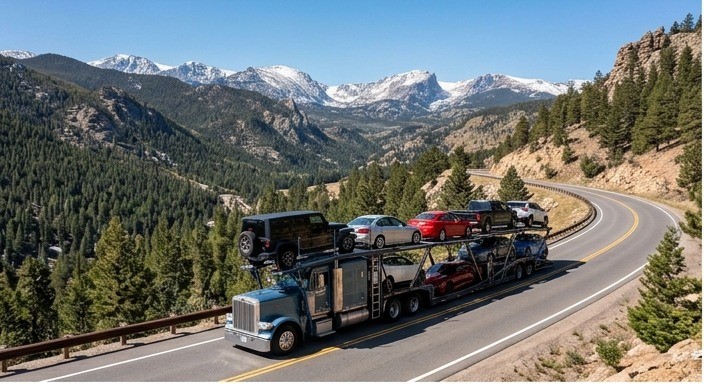
The ranges below reflect open-transport pricing across the regional-to-cross-country routes we run most often out of California, based on the vehicle-class pricing logic carriers use industry-wide (the same load-board factors that shape rates on networks like Super Dispatch). Enclosed transport typically adds 40-55% on top of any row below. Your coordinator will confirm an exact number once they have your specific ZIP codes and dates.
| Vehicle Type | Open Transport | What Drives the Price |
|---|---|---|
| Sedan / Coupe | $900-$1,500 | Baseline open-transport rate. Standard 4-door sedans and coupes load easily on any deck position and carry no size surcharge. |
| SUV / Crossover | $1,000-$1,675 | Roughly 10-15% above sedan pricing to account for added height and weight, which can limit which deck position a carrier assigns. |
| Pickup Truck | $1,050-$1,775 | Roughly 15-20% above sedan pricing. Full-size and extended-cab trucks take up more linear deck space, so a carrier can fit fewer vehicles per load. |
| Inoperable Vehicle | $1,200-$2,075 | Sedan-equivalent rate plus a winch/rollback surcharge (typically $150-$300). A non-running vehicle can't be driven up the ramps under its own power, so the carrier uses a winch cable or a rollback-style loading ramp to pull it into position — this takes more time at pickup and delivery and requires a truck equipped for it, which is why availability can be more limited than for running vehicles. |
Pricing shown is a general market estimate for planning purposes, not a binding quote. Actual rates vary with current carrier capacity, fuel costs, exact pickup/delivery ZIP codes, and time of year.
California carries a modest premium over similar-distance routes elsewhere, mostly reflecting the state's stricter emissions and vehicle-handling regulations that some carriers factor into their rates. That said, because California generates so much shipping volume in both directions, competition among carriers on the busiest corridors, especially LA-to-anywhere, keeps pricing more reasonable than the state's reputation might suggest.
California's coast-to-coast routes to New York are among the longest hauls we coordinate, typically 7-9 days, while in-state moves like LA to the Bay Area can happen almost as fast as a carrier can be assigned. Mountain-pass routes in winter are the one place we build in extra buffer time.
Yes, in most cases. We coordinate pickup and delivery as close to your exact address as safely possible in Los Angeles, San Francisco, San Diego, and throughout California. In dense urban areas, a carrier may request a nearby meeting point for safety and access reasons, which your coordinator will confirm with you in advance.
California has one of the stricter out-of-state vehicle registration processes in the country. New residents must register within 20 days of establishing residency, shorter than most states. A commonly misunderstood rule: even if your vehicle would qualify for a smog-check exemption under California's normal renewal rules (vehicles 8 model-years or newer are typically exempt at renewal), that exemption does not apply to first-time out-of-state registration. Every out-of-state vehicle must pass a smog inspection before it can be registered in California, regardless of model year, plus a VIN verification at the DMV. Fully electric vehicles remain exempt from smog checks entirely. California is also rolling out a new license plate format in 2026 for newly registered vehicles, though existing plates remain valid.
California's smog and emissions rules mean your vehicle's paperwork often matters as much as its physical condition at delivery — we recommend photographing your odometer and any existing wear at pickup, both for your carrier's cargo insurance and for your own DMV registration process once the vehicle arrives.
California is one of the few states where we regularly coordinate both directions in high volume — relocations heading out and luxury or exotic purchases heading in — which means our coordinators see the full range of edge cases this market throws at auto transport, from mountain-pass timing to collector-car handling.
Platinum Auto Shipping LLC is a licensed auto transport broker connecting vehicle owners in California with 15,000+ FMCSA-registered, insured carriers across all 48 continental states.
Registration, inspection, and emissions information above reflects publicly available state DMV guidance as of 2026 and is provided for general informational purposes only. Requirements can change and may vary by county; always confirm current rules with your state's DMV before your move.